Valter Arnborg leads growth at Flowlife, the Nordic recovery-tech scale-up trusted by 300,000 athletes. He joined in 2021 to run e-commerce, and his remit now runs from the offering to the storefront and the systems behind it. We asked him how Flowlife makes decisions about growth, platforms, partners and the store.
Tell us about yourself and about Flowlife: where you come from, and where the company is heading.
Flowlife started in 2016 with a massage pillow, the first cordless one on the market. Ten years later, we sell everything from massage guns and red light panels to cold plunges and hyperbaric chambers in 30 countries.
I lead growth. I come from sales, and I have always been driven by the idea of a business that keeps making money while you sleep. We are not fully there yet, but every system we build moves us closer, and that is the part of the job I love most.
Where we are heading is longevity. People used to recover so they could train again tomorrow. Now they recover so they can still carry their grandkids in 40 years. That is a much bigger market, and we intend to lead it.
300,000 athletes since 2016. What has driven that growth, and how much of it runs through your own channels?
It starts with products people keep using. Then we multiply that with community and marketing at a scale few in our category match. Athletes, clubs, creators and everyday users all feed into the same brand.
Most of it runs through our own channels. Direct-to-consumer is about two-thirds of revenue today, and those channels keep getting stronger. Direct sales grew 77 percent from 2024 to 2025, and we are 64 percent ahead so far this year.
The share used to be closer to 80 percent. It has come down because B2B is taking off in line with the market, with clinics, clubs and distributors growing even faster. That is exactly the position we want. We keep growing where we own the customer, while B2B gets more products into the places where people train and recover.
You evaluated several platforms before deciding to stay on Centra. What tipped it?
We chose Centra in the middle of the API hysteria, when everyone was talking about going headless. What is interesting is that the decision has paid off now that we have the new site. That is when we started using the platform the way we picked it: open APIs that let Centra own all product data and feed everything else, from campaign activation to pricing to our own automation scripts.
Re-evaluating the alternatives mostly confirmed the choice. A more packaged platform would have given us a faster start and a much lower ceiling. We need the ceiling more than the head start.
What was important to you when choosing an agency?
We did not want a finished template that you restyle. We feel fairly secure in what works for us commercially, so we were not shopping for strategy. We were shopping for craft.
We don't sell fashion, but we are a lifestyle brand, and in that category elegance matters too. We loved the design in every project Aino had done, and they paired it with real development credibility on speed and Core Web Vitals. Design studios that treat performance as someone else's problem were out. So were developers who needed us to art direct. Aino was the strong one on both.
“We did not want a finished template that you restyle. We feel fairly secure in what works for us commercially, so we were not shopping for strategy. We were shopping for craft.”
Who runs the store day to day at Flowlife, and what do you handle yourselves versus with partners?
We run the store in-house. Product data, copy, translations and campaigns sit with our commercial team. Most of that now runs through Anthropic's models, with agents trained on our tone of voice, our products and the rules in each market. That lets a small team move at a speed that would otherwise require a much bigger organisation.
The next four questions are about the store itself.
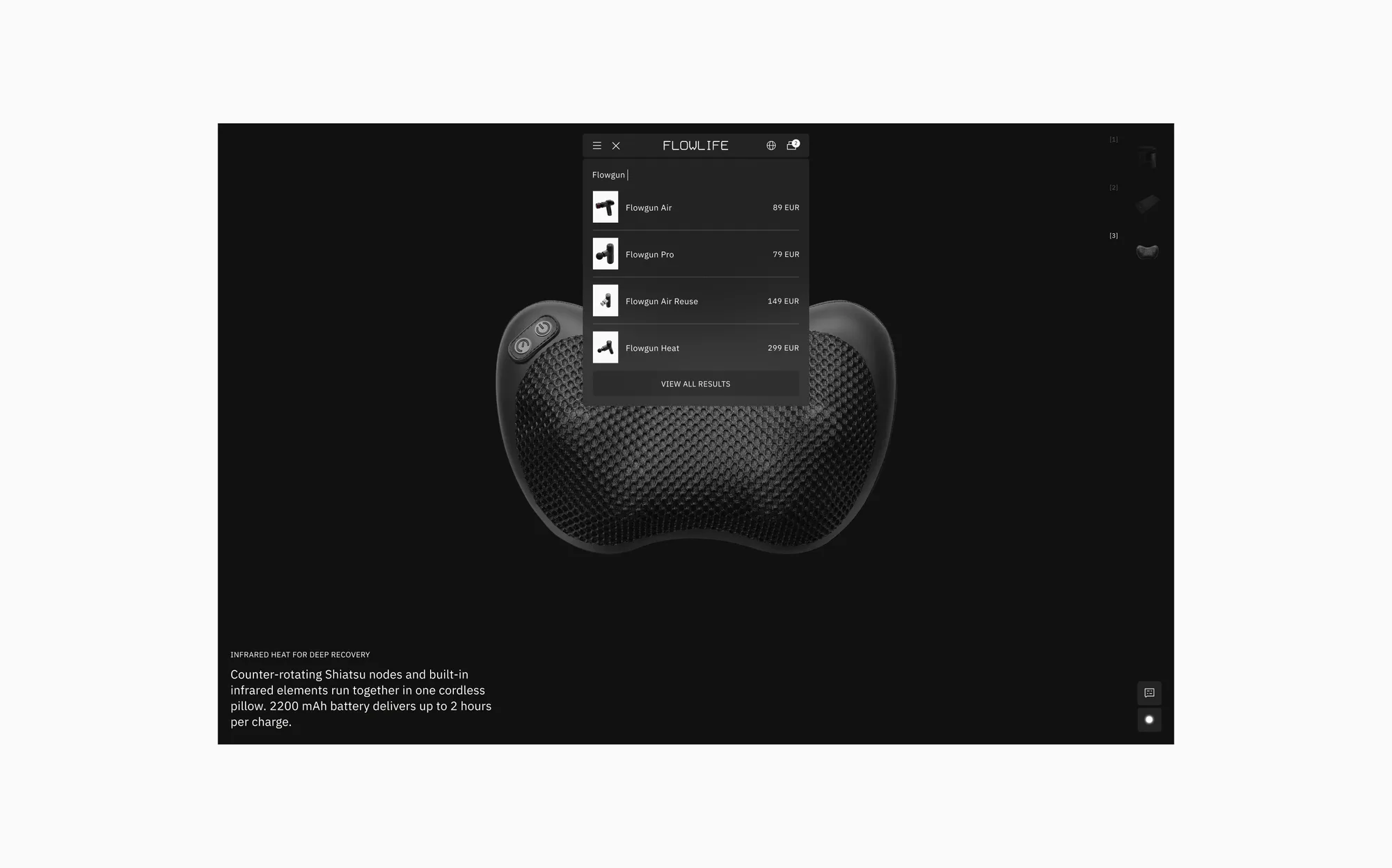
What should a customer feel when browsing flowlife.com, and how did that shape the store beyond the products?
Confident. A lot of recovery tech brands try to speak to everyone, and when you speak to everyone, you end up speaking to no one. We made a different bet. We speak to the limitless achiever, the person who trains hard, works hard and always looks for the next edge.
They are the gatekeeper. When they adopt something, the people around them follow. Reaching the consumer mass in 2026 is not the hard part. Earning the trust of the person everyone else looks to is.
That shaped the whole store. The tone is sharp and specific about what happens in the body, with no hype, because this customer sees through it instantly. Pages are built around body parts and therapies, so the explanation comes before the product. If the limitless achiever is convinced, the rest takes care of itself.
What was important for you to get right about navigation and product discovery on the new site?
Eighty percent of our traffic is mobile, so every decision started with the phone. We designed the mobile experience first and let desktop follow, right down to using the same menu on both. The result was a desktop experience that became simpler almost by accident. With less navigation competing for attention, our products and imagery get the space they deserve, and we are genuinely proud of that.
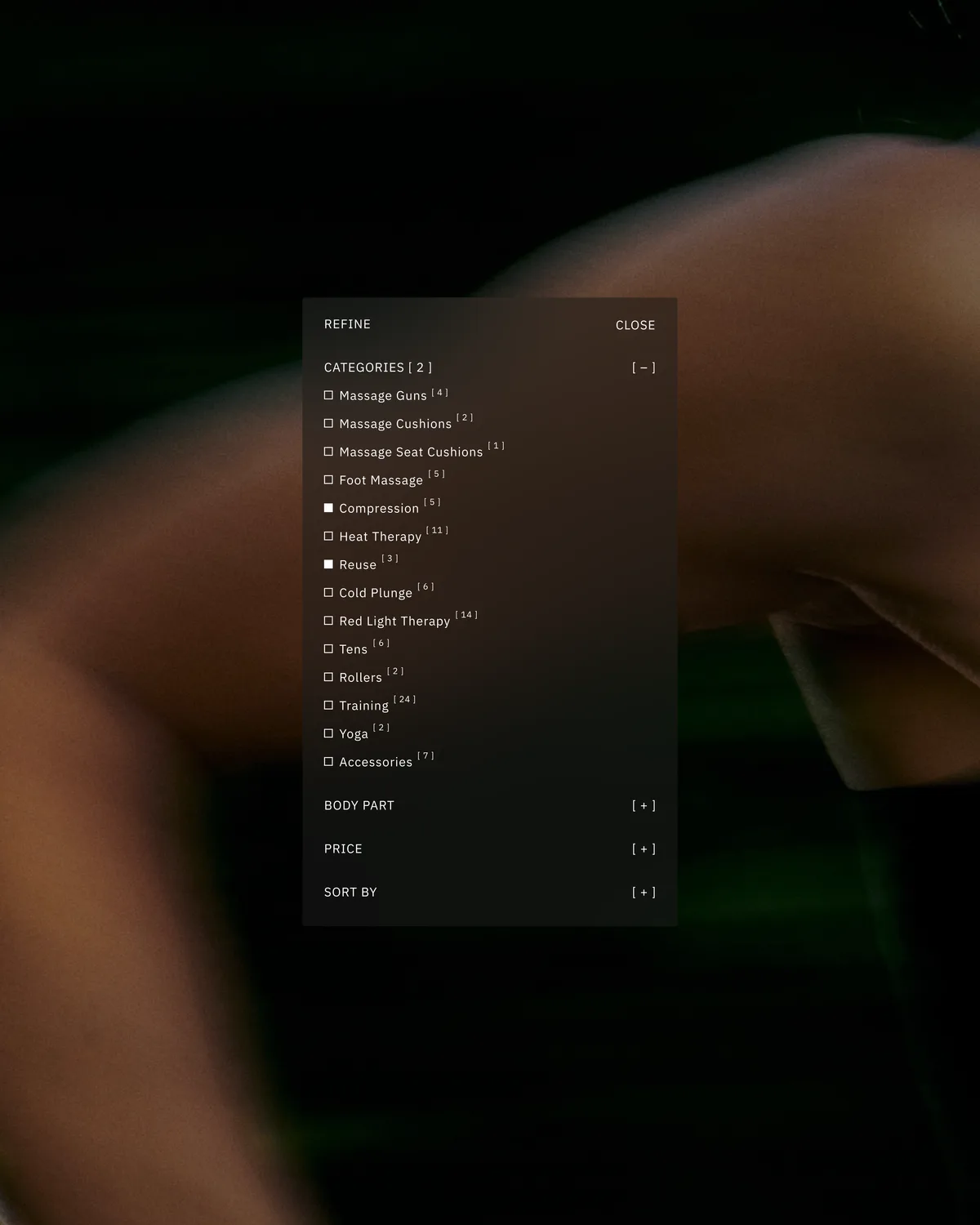
On discovery, the starting point was that people usually arrive with a problem rather than a product name. The routes in are therefore body part, therapy and situation, and the product page is where those three meet.
30 countries, 11 markets, 10 languages. What does adding a market involve today, compared with before?
Launching a new language used to be the world championships of copy and paste. An agency, a huge spreadsheet and a deadline that always slipped. Today it is a few clicks and a review. Centra handles commerce and markets, Storyblok the content, and our own copy agent writes in our voice with each market's rules built in.
That changes the growth equation completely. Content no longer sets the pace of expansion. What takes time now is payments, logistics, tax and local terms, and those are predictable problems with known solutions. It means we can plan new markets far more aggressively than before.
Where does AI show up in your work with the store today, and what does it change in what you expect from a partner?
Everywhere. Product texts, translations, campaigns, analysis, and automations like a robot that checks reseller prices every morning before anyone is in the office.
It has also changed what I expect from partners. Good API documentation used to matter only to developers. I am not a developer, but with AI I can take that documentation and turn a commercial idea into something that runs the same day. That is why tools with open APIs are now a requirement for us, not a nice-to-have. Without them we cannot work at the pace we want.
How will people buy from Flowlife in five years, and how do you think agentic commerce will change the buying experience for a brand like yours?
Faster. My guess is consumables go agentic first, since repeat purchases are the obvious place to let an agent buy on your behalf. Buying online was never really hard. It just took time, and whoever removes that time wins.
That brings us back to where we started. Time is the scarcest resource for people who already have the essentials in place, and it is the same instinct behind longevity. Save time on the buying, spend it on staying strong. Today that is still a fairly small movement. Within five years, it is one of the biggest in wellness.
Case study: Flowlife
Flowlife: flowlife.com
Valter Arnborg on LinkedIn